

Evaluation of rental price regulations in Brandenburg
The evaluation examines the existing tenancy law regulations in Brandenburg and prepares the decision on continuation and geographical scope from a technical perspective. To this end, effects, indicators, and possible further requirements are classified in such a way that the future design can be demonstrably justified.
 AI-generated image
Project description
What this project is about
Against the backdrop of rising rents and a tight housing market, the federal states have been given the opportunity to regulate rent price development through statutory instruments. In this context, two important regulations were introduced: the rent cap regulation and the rent control regulation. The state of Brandenburg first made use of this option in 2014 and most recently in 2021.
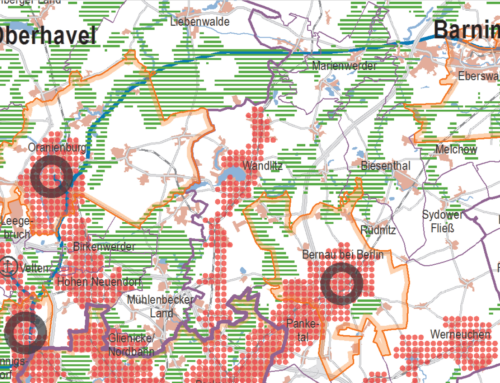
The current Rent Cap Ordinance, which has been in force since 1 January 2021 and remains in force until 31 December 2025, limits rent increases for existing tenancies in 19 municipalities to 15% over a three-year period. The Rent Control Ordinance, also known as the rent cap, first came into force in Brandenburg in 2016 and was most recently renewed in 2021; it applies to the same 19 municipalities.
This regulation also applies until 31 December 2025 and stipulates that, at the start of a tenancy, the rent may not exceed the local comparative rent by more than 10 %. In 2024, the effects of the Rent Cap Regulation and the Rent Control Regulation are to be reassessed in order to decide whether these regulations should be extended.
In the event that an extension of the validity of the regulations is deemed necessary, it must be examined which municipalities will be part of the designated area in the future. At the same time, the evaluation should serve to review the use of current and potential future indicators for defining the designated area. Furthermore, the need for and potential impacts of a regulation pursuant to Section 201a of the German Federal Building Code (BauGB) should be examined.
The aim of this evaluation is to assess the effectiveness of existing regulations and provide well-founded recommendations for the future design of these instruments. Within the scope of the project, and in close coordination and division of labour with the project partner, I will provide services in the area of selecting the method and indicators for the evaluation, designing, conducting, and analysing an online survey of selected municipalities, recommendations for the future design of the instruments, and determining possible further indicators for the definition of a new territorial framework (if necessary). (Note: The project descriptions modified by me and presented here were jointly developed by the respective project participants.)
At a glance
Further information